/



Modern-day Georgia is said to be the cradle of wine, with 8,000 harvests to its name. Proof lies in the shards of jars found in the southern Caucasus, soaked with tartaric acid and pollen—the earliest biomarkers of fermented grape.
The word “Georgia” means “one who cultivates the land.” It foreshadowed the role vine and wine would play in the history of this small country wedged between great empires. It is even said that the warriors of Kakheti went into battle with a vine stock belted around their waist, so that if they died there, they would be reborn as a vine.
Tradition has it that each family makes the wine that will sustain it from one harvest to the next. Quantities range from a few hundred to several thousand litres, depending on regional habits and the thirst of the lineage. As I timidly taste my host’s father’s homemade wine under the steady gaze of the entire family—wondering what the Frenchwoman will think—I understand that diplomacy is required. “My father makes this very bad wine that he thinks is fabulous,” the young man guiding me through his country’s millennia-old wine traditions had warned me. So we will skip constructive criticism in favour of an affectionate smile and a thumbs-up, paired with: “It’s really original—different from anything I’ve tasted before.”
The house wine clocks in at between 9 and 11% ABV. Never bottled, with no additives of any kind, it is vinified in “qvevri”: imposing clay amphorae into which it is poured after fermentation. They weigh two tonnes, hold more than 2,000 litres, and are buried 2.30 metres deep at a stable temperature of 15°C. They are sealed with a heavy lid and covered with earth until they disappear entirely from view—whether of the tourist or the invader.
The juices, overwhelmingly white, macerate in contact with the skins for several months. The wine then develops a surprising structure—an assertive, gripping texture, a deep flavour, sometimes oxidative and rather captivating. They call it “amber wine,” but in the trendy bars of the rest of the world, where it has found its place with a public enamoured of all things natural, it is known as “orange wine.” In Georgia, it is really not fashionable.
The evening continues with the 9,000-year-old rite of the “master of toasts,” perpetuated to pass national values on to new generations. At the table, and late into the night, toasts follow one another in meticulous order. The patriarch or matriarch of the clan—appointed master of toasts, or “tamada”—raises the first toast to peace and freedom, the second to God, the third to the reason for gathering, the fourth to family, and so on, for a good dozen honours. It is common for it to last all night: three litres of wine per person, and up to seven for the Tamada, whose fervour transcends any crisis of faith. As a child, you probably wonder why it matters so much. Teenagers find it boring. Then, as they grow up, they understand its full meaning...
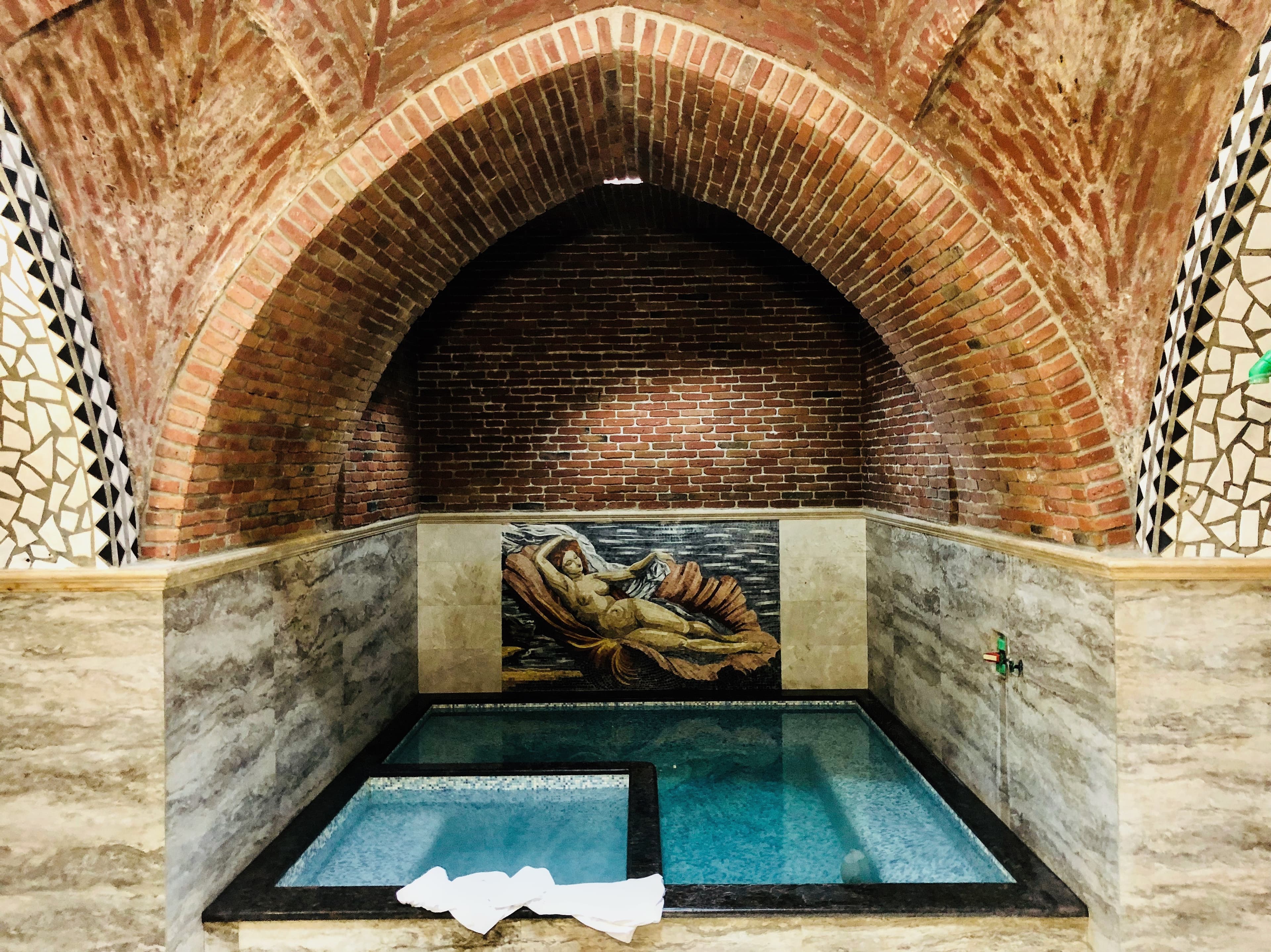
Bains de soufre à Tbilisi
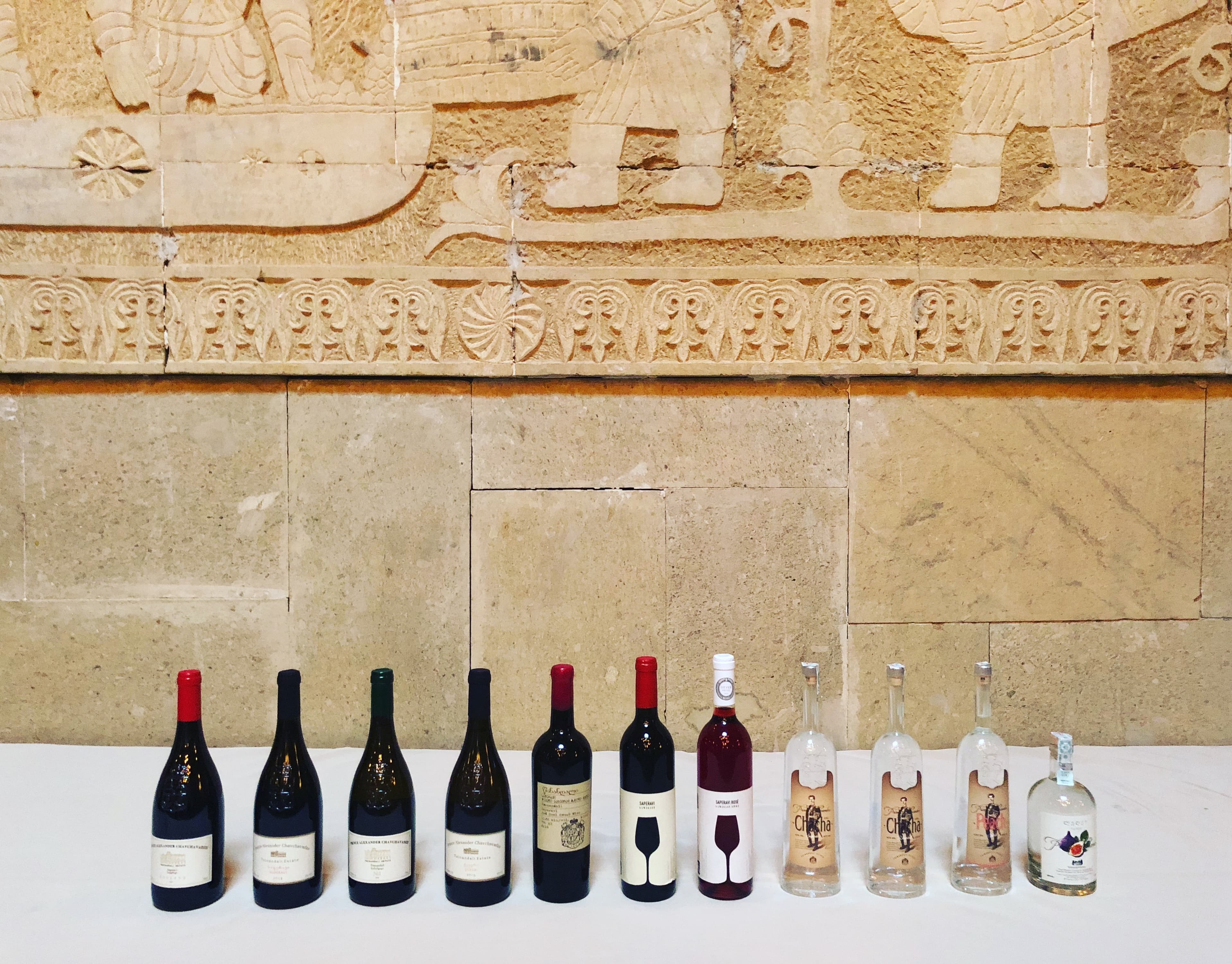
Dégustation de vins georgiens
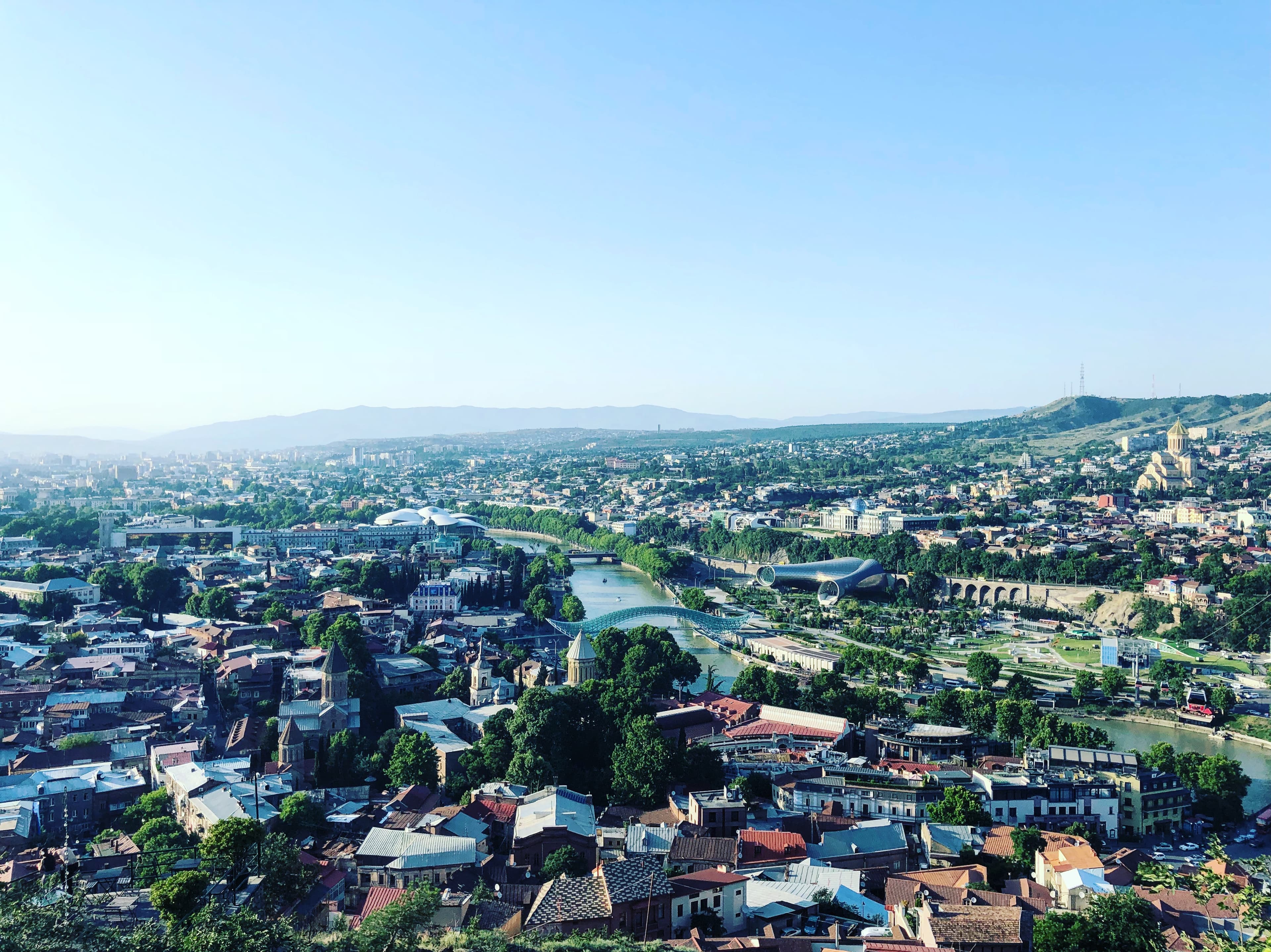
Tbilisi
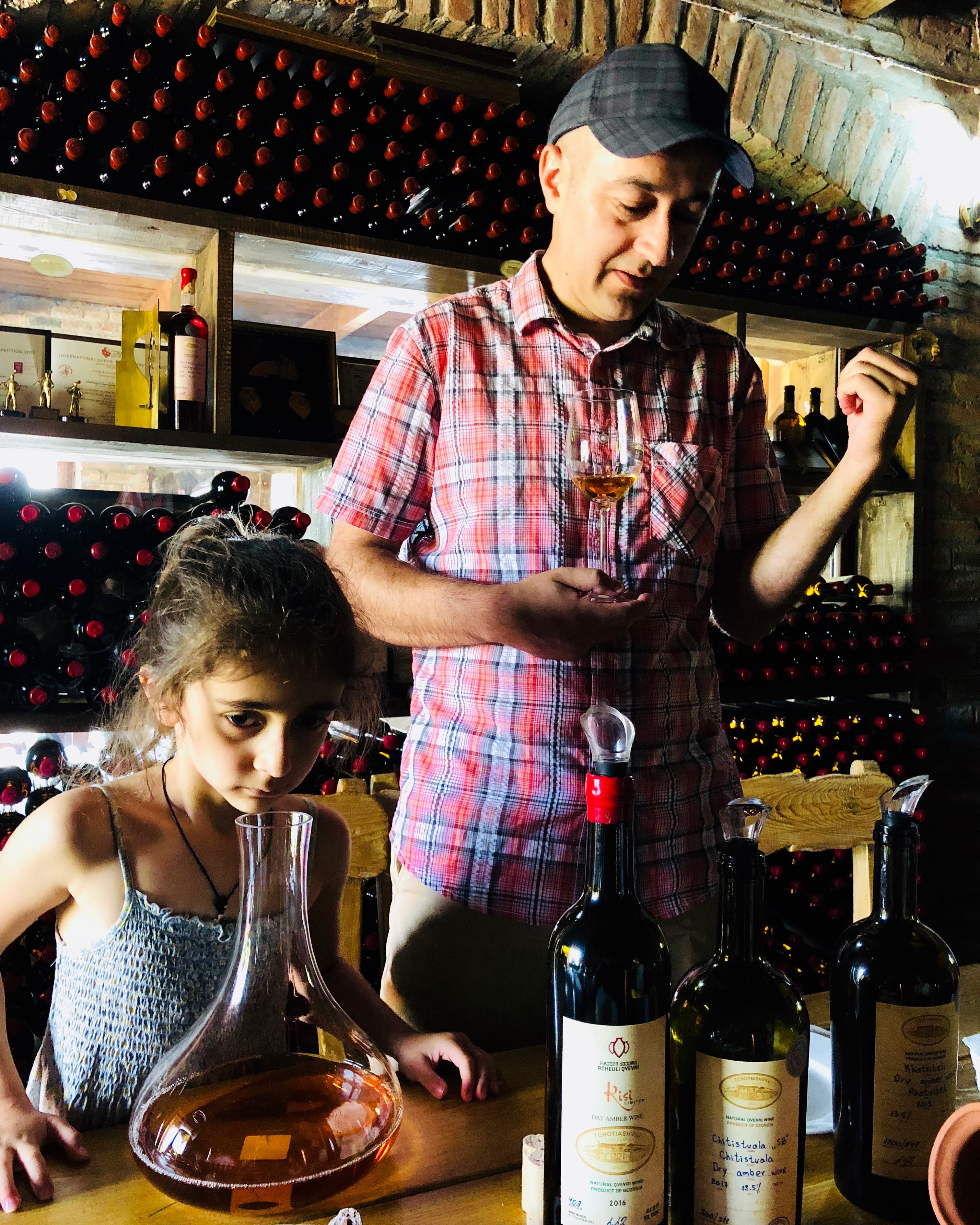
Wine tasting in Georgia