/



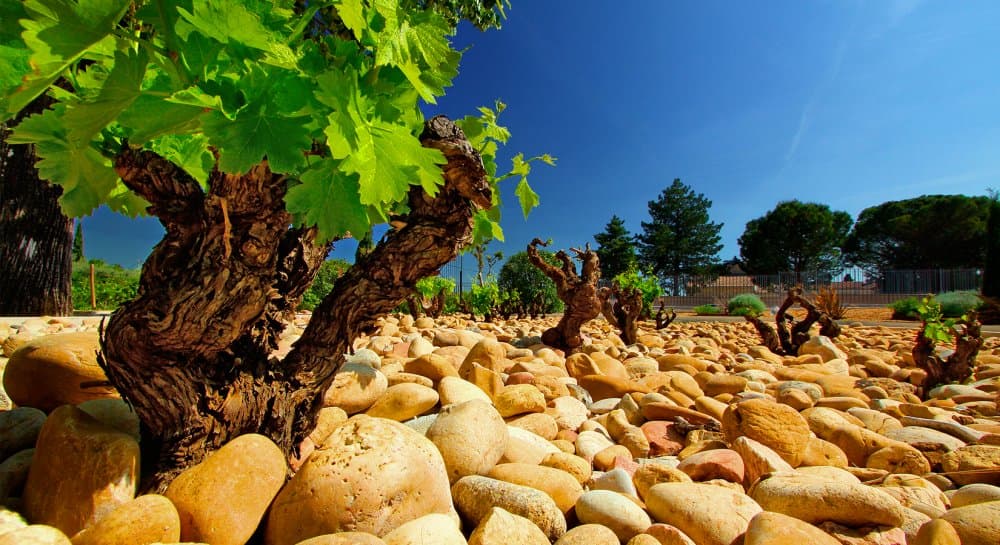
From the early 1980s, Nicolas Joly has farmed his vines according to the principles of biodynamic viticulture. A leading figure of this method—whose foundations were laid in the early 20th century by Rudolf Steiner—he has championed it through his many books and through his growers’ association, Renaissance des Appellations. Here are his explanations.
What opportunities does the monopole status of Coulée de Serrant give you?
I’m not subject to anyone. In every AOC, there’s a bit of tug-of-war… The Coulée has its own controlled appellation, which allowed me to begin biodynamics without too many problems. It’s an extraordinary strength.
You’ve inspired many growers to adopt biodynamic farming. How did you come to this path?
I’m 72, and the more I look back, the more I tend to believe destiny led me there. After an MBA at Columbia, I worked in banking in New York, then in London. I left the bank overnight just as I was being offered a promotion. That was in the 1970s—the reign of money; you quickly realise it’s empty. I couldn’t take it anymore and I came back here, to the family property. The vineyard was running at a loss. People encouraged me to use herbicides, which I did for a year. I saw the soils crack, animal life disappear. I was looking for a solution. At my first biodynamics course in 1976, taught by Xavier Florin, I left thinking, “What is this nonsense?” I arrived a bit late and I heard talk of planetary nodes, the horn effect—I thought, “These people are crazy”… Six months later, a printer gave me a book on Steiner. I started reading it and thought this man was brilliant. I tried to recreate his preparations and it was a complete failure, so they sent me back to Xavier Florin. With him, everything made sense. Some people carry an exceptional knowledge from the past.
How would you define biodynamics for a novice?
It starts from an observation: life does not belong to the Earth; it is given to it because it is part of the solar system. If you were to wrap the Earth in a great sheet of black plastic, all life would disappear. How does this life work? It’s cosmic wavelengths that carry a message. Billions of pieces of cosmic information reach the Earth. Biodynamics works at the moment when energy is converted into matter. If you’ve put cosmic forces into symbiosis within the grapes, there’s nothing to do in the cellar—which is the opposite of what is taught today.
That’s what you advocate: non-intervention in the cellar. What do you mean by that?
In practice, it means no temperature control—fermentation is a fever; heat is there to regain a natural balance, so it’s a therapy—never re-yeasting (no inoculation), to respect the originality of the place, which generates yeasts perfectly adapted to it; long fermentations of three or four months; and no new oak, because a truly good wine doesn’t need new oak—it’s an artifice. No one in Bordeaux a hundred years ago would have changed barrels every year! They started doing that when viticulture reduced the vine’s capacity to absorb the place, because of herbicides. These are tricks that correspond to conventional agriculture, not to living agriculture.
What do the biodynamic preparations you use to support the vine consist of?
Each specific plant chosen by Steiner corresponds to a planet. These preparations are then added to composts. You have to understand them like sourdough starter for bread: you use very little, but it’s what makes it rise. To explain it to scientists, I call them mobile phone numbers. You call someone thousands of kilometres away and you hear their voice. It works the same way, by a wave—a gigahertz. The preparations create an energetic channel which, instead of carrying a voice, carries the force of the planet. Practising biodynamics is therefore reconnecting your place to the solar system through waves that carry life. The enemy is not CO₂ but electromagnetic pollution: this shield formed by thousands of satellites that blocks the conversation between sky and earth. People who practise biodynamics help their plant restore that dialogue.
Is there a collective effort among Loire growers towards organic farming and biodynamics?
We are better understood by institutions. We’re heading towards 90% organic in the next five to eight years. Those who don’t do it will face major financial difficulties—more for health reasons than for the authenticity of taste. My fight is for a return to the truth of taste in AOCs. There’s not much left of that inimitable taste we claim to protect worldwide, because we were allowed to poison soils and sap and then recreate a taste in the cellar. Biodynamics makes it possible to return to the truth of taste and to the originality of appellations of origin, which is our trump card—France’s. If we had no terroir, we could play at being idiots with technology. But when we have some of the greatest terroirs in the world, we make technological wines that the entire world can copy… It’s nonsense!
What do you say to those who don’t believe in this way of farming?
What’s stronger than me is explaining to people what it is. Minds that are too scientific let themselves be locked into matter.
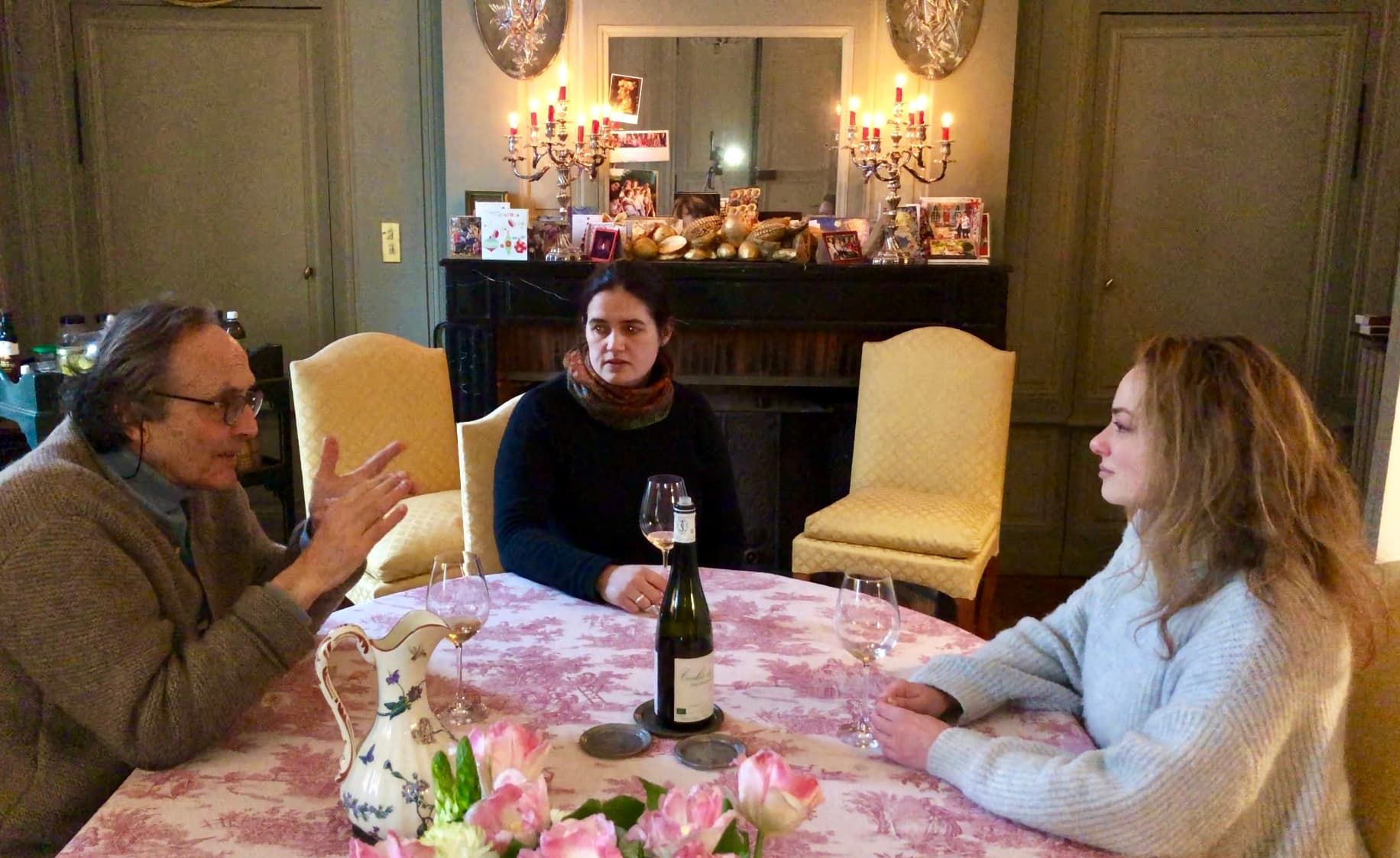
Wine critic Gabrielle Vizzavona interviews Nicolas Joly and his daughter