/



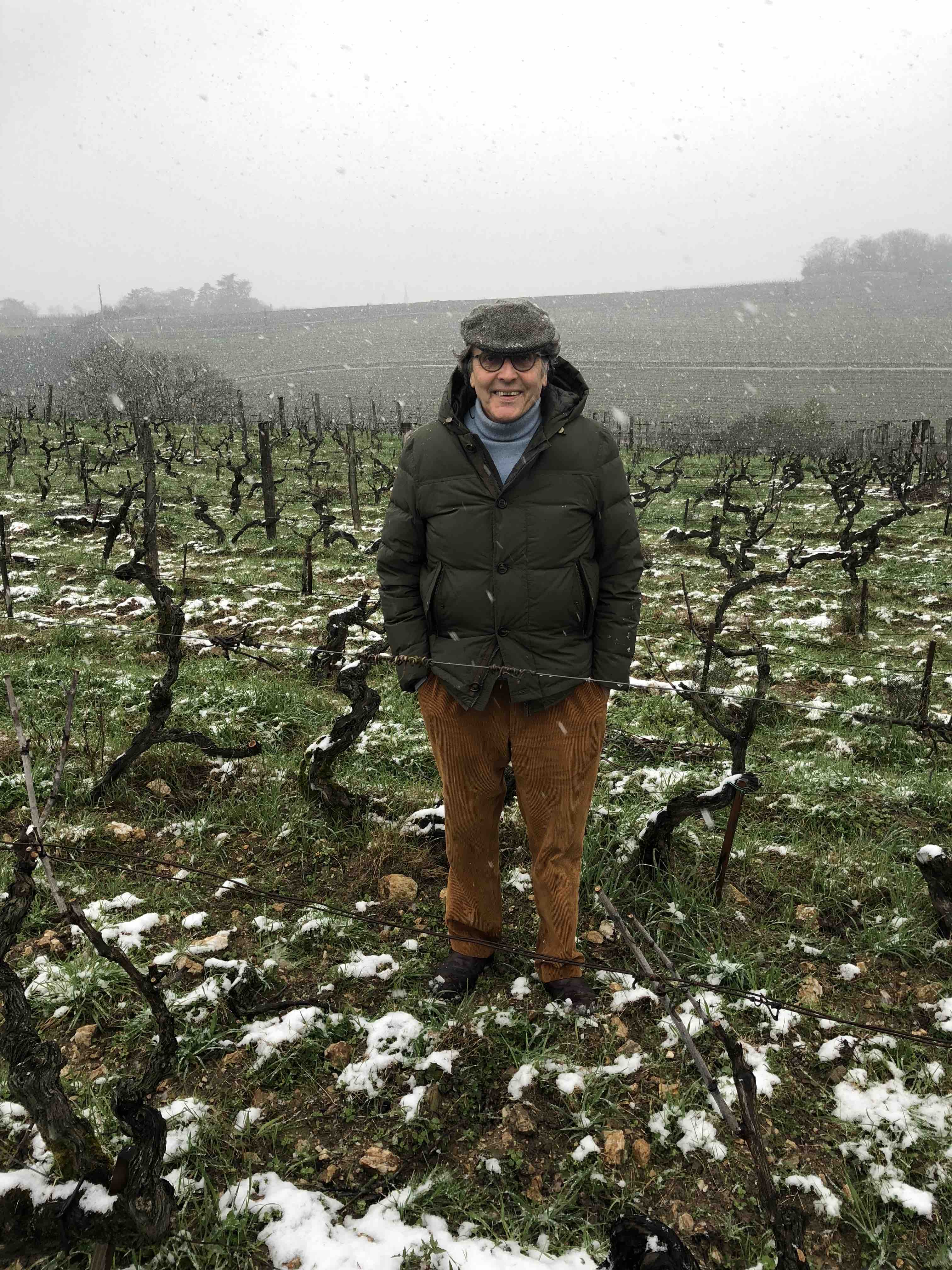
The bottle, emblazoned with a papal tiara topped by the Keys of Saint Peter, recalls the legacy the popes left in Avignon for more than a century, at the heart of the Rhône Valley. They had made the small village of Châteauneuf—just a few kilometres away—their summer residence, and developed the vineyard there. It was here that the concept of the AOC (Appellation d’Origine Contrôlée) was born—at least its “C”, the idea of control—introducing as early as 1936 the notion of oversight via a set of rules defining common production standards for the area, including the very low yields still required today (35 hl/ha). “It’s a small village with a Mediterranean climate; the sky is blue and we’re all deeply attached to it. The terroir is very particular—we love its complexity and diversity,” says grower Frédéric Coulon, with tenderness.
The 3,200 hectares of vines stretch across five communes and are shared among more than 300 growers. Red wines largely dominate production (93%). Thirteen grape varieties may be used in the blends, chiefly Grenache Noir (72%), Syrah (10.5%) and Mourvèdre (7%). Old Grenache vines are one of the appellation’s great fortunes. “It’s a very impressive AOC, because this is where you find the greatest concentration of old vines in the world. At least 40% of the vines are over 60 years old,” declares consultant Pierre Cambie, adding: “Grenache is like Pinot Noir in Burgundy—it’s an identity grape for the different soils where it is planted. It carries its terroir.” Paradoxically, great age gives the vines greater resilience—notably in the face of climate change. Their deeply set roots—sometimes more than seven metres underground—make them less sensitive to surface drought. Grenache vines take on their distinctive posture from the mandatory gobelet pruning: bush vines springing from the earth like hands stretched towards the sky.
Soils and subsoils have been shaped by the Rhône’s whims, giving the vineyard its informal beauty. They are dominated by the river’s famed galets roulés—rounded pebbles (60%)—which make the AOC’s reputation as much for the singularity of the landscapes they create as for the imprint they leave on the wine. Beyond their thermoregulatory effect—storing daytime heat and releasing it at night—their major influence likely lies in what is known as the “mulch effect”: the pebbles slow the evaporation of water; unable to rise by capillarity, it is stored in the soil and remains available to the vine. A prized advantage in such an arid climate. Wines grown on galets are rich and powerful, sometimes fiery. High alcohol levels can be reached on these warm soils, depending on exposure and subsoil quality.
“Grenache is a sugar machine—we’ve always had high alcohol levels, but it has never compromised the balance of well-made wines,” Pierre Cambie maintains. Châteauneuf-du-Pape is one of the rare appellations where high alcohol is tolerated—by the regulations and by consumers alike. Eighty percent of them are outside France, led by Anglophone markets: a public accustomed to New World wines that often come in at substantial degrees.
Safres (20% of the soils)—fine, powdery sands, more or less rich in clay—produce elegant wines, wrapped in fruit, while allowing Grenache to ripen without excessive alcohol. Limestone shards (éclats calcaires, 15% of the AOC’s vineyard surface)—hard земли of blinding whiteness under the sun—force vines to worm their way into fissures; sap flow is slowed, compelled to follow a serpentine route. “It’s interesting to think that root length places the vine under stress and triggers its secondary metabolisms—aromatic precursors,” comments Édouard Guérin, oenologist at Maison Ogier.
Extreme situations push the plant beyond its limits. Red sandstone soils (5%), rich in iron and in fossil shell fragments, also have a distinctive aromatic signature. At tasting, it is striking to observe the inescapable correspondence between the geometry of the soils and the structure of the wines on the palate: the fine grain of wines from safres that slip through your fingers; the fleshy roundness of those from galets; the echoed granularity of limestone; the angularity and flax-like texture of wines from sandstone. If some vines are sheltered from the wind behind forests of holm oak and downy oak and Aleppo pine, all are also protected by it—an itinerant benefactor that cleanses by drying the vineyard after rain, preventing the ill-timed development of disease. This encourages organic viticulture: a quarter of the AOC is certified, a figure largely exceeded in practice (nearly three quarters of the appellation).
The style of Châteauneuf-du-Pape is often simplified into two “schools”: modern and traditional—largely hinging on whether the bunches are destemmed or not (destemming being the operation of separating berries from stems before fermentation, thereby forgoing the additional tannins contained in the rachis). Brought back into focus in the early 2000s, destemming produces wines that are enjoyable earlier. “I’m not convinced there are truly two styles. What does it mean to be modern? If you look at 19th-century texts, Victor Rendu—an ecclesiastic winemaker—recommended destemming, and that is considered ‘modern’ today,” objects Frédéric Coulon.
Only one duality remains undeniably true: the personality of Châteauneuf-du-Pape itself—between warmth and freshness, the musculature of the body and the finesse of the bones. A delicate balance, like that of vines whipped by the wind.